Moisture Inspection and Leak Detection in New Jersey

We offer fast, reliable discovery of water leaks in new and existing properties across New Jersey.

One of the worst things that can happen to you as a homeowner or property owner is finding out there are leaks and your house is waterlogged. This is because it never stops there. That moisture retained can graduate into a mold problem that now plagues properties across New Jersey.

In New Jersey, it’s more common than you realize. There’s the seasonal rain, snowmelt, coastal humidity, and aging infrastructure. If your property is suffering from water intrusion, that can  damage homes and commercial buildings long before you start seeing the effects.

At New Jersey Mold Specialist, we provide you with accurate moisture inspection and leak detection services across New Jersey. We help you find the source of water intrusion early, stop further damage, and prevent mold growth, structural deterioration, and costly repairs.

Let us know if you’re dealing with a suspected leak or just want peace of mind. Our team of experts use advanced detection methods to locate moisture without unnecessary demolition.

Contact us today to schedule a professional moisture inspection anywhere in New Jersey.

Why You Need Moisture Inspection and Leak Detection in New Jersey

It’s not pleasant finding out your property is holding excess moisture but what is worse is not discovering the issue earlier. A lot of homeowners and business owners don’t realize there’s a leakage in their building until it does a number. By then, the water would have soaked into the drywall, insulation and flooring. At that point, what was just a leak issue turns into a full blown mold problem requiring remediation.

You need early moisture inspection and leak detection because:

  1. You discover the leak problems early: If found early, moisture problems and leaks are cheaper to fix. You would be able to identify water intrusion before it weakens your house structure or cause more serious issues.
  2. You prevent mold: Damp areas breed mold. Once the moisture stays for 24 – 48 hours, the mold begins to develop. However, if you discover the leak fast, you can remove the moisture before the mold gets a chance to grow and spread.
  3. You protect your property’s structure: When your property gets exposed to moisture, materials like wood and metal start to rot and corrode. The structure weakens and over time, it compromises the integrity of your property leading to major structural repairs. With moisture inspection, you can preserve the strength and safety of your building early.
  4. You avoid costly repairs and downtime: Water damage repairs are mostly because there’s often tearing out walls, floors, or ceilings. For businesses, this can mean lost revenue and disruption to operations. Early detection reduces the scope of repairs and keeps costs under control.
  5. You maintain a healthier indoor environment: Excess moisture can affect your indoor air quality. The damp conditions allow mold bacteria, and allergens that can trigger respiratory issues to grow and spread. It also causes headaches, and other health concerns. But with moisture inspection, you can maintain a safer, healthier space for occupants.

You protect property value and compliance: The value of your property can reduce with water damage. This can complicate real estate transactions, insurance claims, or code compliance. Our professional moisture inspection provides relevant documentation which is important for you as a property owner or manager in New Jersey.

Sources of Moisture Leaks on Residential and Commercial Properties

Sources of Moisture Leaks on Residential and Commercial PropertiesMoisture problems can stem from many places. In New Jersey, you can experience water infusion from multiple sources and that makes surface level fixes inadequate to solve the real issue. If you don’t do proper moisture inspection and leak detection, these moisture sources remain hidden for months, or even years.

Below are the most common ways moisture enters residential and commercial buildings across New Jersey:

Plumbing System Leaks

Plumbing leaks happen to be one of most common sources of excess moisture. Depending on how the system is run, these leaks hide moisture behind walls, under floors, or above ceilings where they are difficult to spot.

Common plumbing-related moisture sources include:

  • Aging or corroded pipes
  • Loose or damaged pipe joints
  • Leaks under sinks and behind toilets
  • Leaking supply lines to appliances such as dishwashers and washing machines
  • Cracked drain or sewer lines

If there are many plumbing leaks, the water releases slowly and the damage builds up over time. Moisture inspection helps locate these leaks before they lead to warped flooring, mold growth, or structural decay.

Roof Leaks

The heavy rain, snow accumulation, freeze-thaw cycles and strong winds place constant stress on roofing systems in New Jersey. It weakens the material over time and may cause leaks.

Moisture intrusion from the roof often results from:

  • Missing or damaged shingles
  • Deteriorated flashing around chimneys and vents
  • Poorly sealed skylights
  • Flat roof membrane failures on commercial buildings

You won’t always notice leaks directly below the point of entry. Water can streak along beams and insulation before appearing elsewhere and that is why you need professional leak detection.

Foundation Cracks and Basement Seepage

Your basements and crawl spaces are one of the most vulnerable areas to moisture issues in New Jersey. Poor drainage, high groundwater levels, and hydrostatic pressure can easily force water through even small foundation cracks.

Some of the common foundation-related moisture sources include:

  • Hairline cracks in concrete foundations
  • Improper grading around the property
  • Blocked or damaged drainage systems
  • Failing sump pumps
  • Inadequate waterproofing

Once there is moisture intrusion at the foundation level, it causes dampness gradually, musty odors, and if not properly addressed, it turns to recurring mold problems.

HVAC System Condensation

Your heating and cooling systems can cause moisture problems when they are not functioning properly. These condensation issues are common in both residential and commercial properties in New Jersey.

Moisture may result from:

  • Clogged or disconnected condensate drain lines
  • Poor insulation on HVAC components
  • Oversized or improperly calibrated systems
  • High indoor humidity levels

If there’s no proper inspection, the HVAC-related moisture problems can spread mold through ductwork and affect your indoor air quality.

Window, Door, and Envelope Failures

The building envelope which is the barrier between indoor and outdoor environments, is another way moisture enters your property. 

This can happen through:

  • Poorly sealed windows and doors
  • Aging caulking or weather stripping
  • Improper installation
  • Wind-driven rain penetrating exterior walls

Even the minor gaps you don’t pay attention to can allow water to seep into wall cavities. Usually, it remains hidden until the damages become noticeable.

Exterior Drainage and Landscaping Issues

When your drainage system is improper drainage, it can direct water toward the structure of your property instead of away from it.

Problems related to this include:

  • Downspouts discharging too close to the foundation
  • Clogged gutters
  • Poor yard grading
  • Hardscaping that traps water near walls

Over time, repeated exposure to moisture can overwhelm a building’s defenses, leading to leaks and interior damage.
Long-term Effects of Ignoring Water Leaks

Water leaks rarely stay small, especially if it’s not discovered fast. If you ignore moisture problems or patch it temporarily, they continue to worsen beneath the surface. In your New Jersey properties, this can become long-term consequences that will affect both the building and the people inside it.

Here are some long term consequences of leaving water leaks for long:

Structural Deterioration

If you leave your space exposed to moisture for long, it weakens key structural components. Your wood framing can rot, metal fasteners can corrode, and concrete can crack or crumble. Over time, this compromises the stability and safety of the property.

Mold Growth and Spread

Mold grows fast in damp environments. If moisture is present and unattended on your property, mold can spread quickly through walls, ceilings, insulation, and HVAC systems. This will damage materials and make remediation more complex and expensive.

Health Concerns

The presence of moisture and mold on your property can add to respiratory problems, allergies, headaches, and other health issues. In commercial settings, this can translate to employee complaints, absenteeism, or even liability concerns. You may even get sued.

Increased Repair Costs

What starts as a minor leak can turn into a major repair project. If you ignore moisture problems,  you may have to demolish, pay for mold remediation, and extensive rebuilding. That cost far more than early detection and repair.

Reduced Property Value

Water damage and mold issues can reduce the value of your property. That can complicate real estate transactions, inspections, and insurance claims, especially when there is a documented history of unresolved moisture problems.

Schedule a call

Reliable Moisture Inspection And Leak Detection in New Jersey

Accuracy is very important when it comes to moisture problems. You can’t do guesswork, assumptions, and surface-level inspections because those often make you miss the real source of the issue. That’s why property owners across New Jersey rely on our professional moisture inspection and leak detection instead of temporary fixes.

At New Jersey Mold Specialist, we use  a thorough, methodical approach to identifying moisture problems. We look beyond the water damage we can see and trace moisture back to its origin. This allows us to stop the problem at the source and prevent recurring damage.

Our moisture inspection services are designed for:

  • Residential homes
  • Apartment buildings and multi-family properties
  • Commercial and office spaces
  • Schools, healthcare facilities, and public buildings

Based on experience, we have dealt with and understand the unique construction styles, climate conditions, and moisture challenges common in New Jersey. That local knowledge, combined with advanced detection tools and skills, allows us to deliver reliable results every time.

What Makes Our Moisture Inspection Services Reliable?

Advanced, Non-Invasive Technology

We use professional-grade equipment to detect moisture behind your walls, under floors, and above ceiling. They are safe and effective for moisture and leak detection. This allows us to identify any leaks while preserving your property.

Trained and Experienced Specialists

Apart from having the right tools, we have skilled hands to use them. Our specialists are trained to read moisture patterns, understand building systems, and recognize how water behaves in different structures. They can also interpret the results accurately for appropriate measures.

Accurate Source Identification

Finding moisture is only half the job. We also commit to identifying where the water is coming from and how it got there. This prevents repeat issues and ensures corrective actions are effective.

Clear Documentation and Reporting

We understand the place of documentation for clarity. We back our inspections with clear findings and documented results. This is especially handy for insurance claims, property management records, and future remediation planning.

Reliable Moisture Inspection And Leak Detection in New Jersey

How Do We Carry Out Moisture Inspection and Detection on Your Property?

We understand that all properties are different, so our inspection process follows a proven framework that uncover both visible and hidden moisture issues. We do visual assessment and also use specialized tools to get a complete picture of what’s happening inside your house.

Visual Inspection

We start the inspection with a detailed visual assessment of the property. We check the areas where moisture problems commonly occur, including:

  • Walls, ceilings, and floors
  • Basements and crawl spaces
  • Bathrooms, kitchens, and laundry areas
  • Roof system and exterior walls

You would see signs such as staining, peeling paint, warped materials, or musty odors and those help guide our test.

Pressure Testing

We use pressure testing to identify leaks in plumbing systems that you may not sight at first glance. When we monitor the pressure changes, we can determine if pipes are leaking behind walls or under slabs.

This method is especially useful for detecting:

  • Slow plumbing leaks
  • Underground or concealed pipe failures
  • System integrity issues in older buildings

Moisture Meters

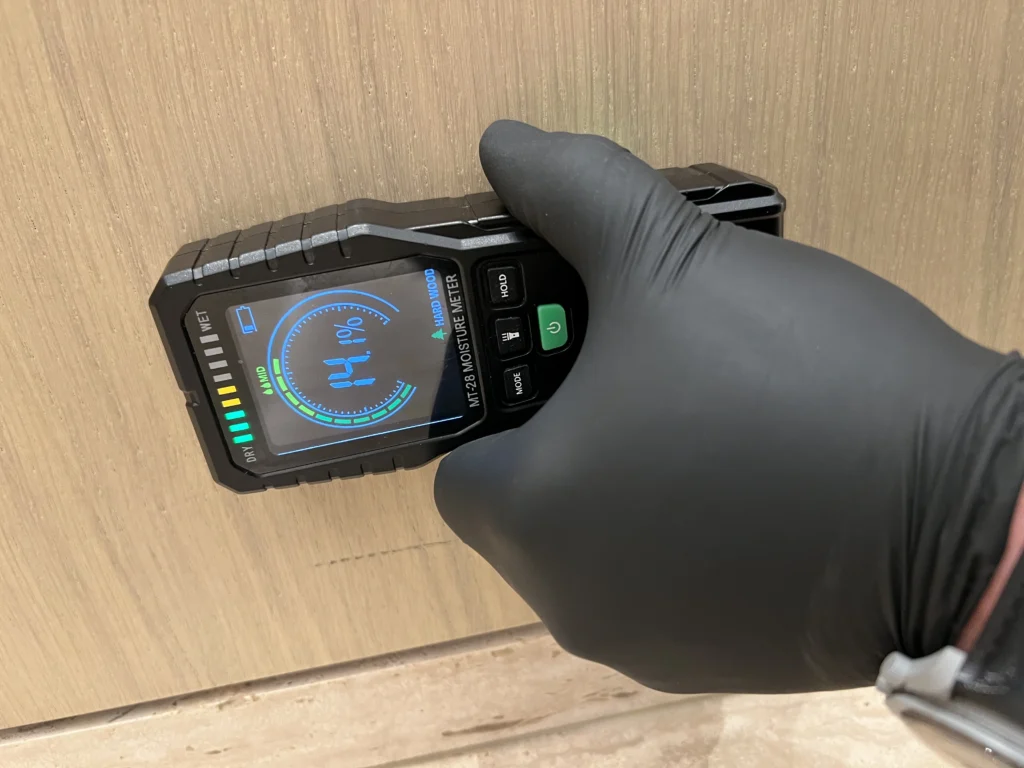
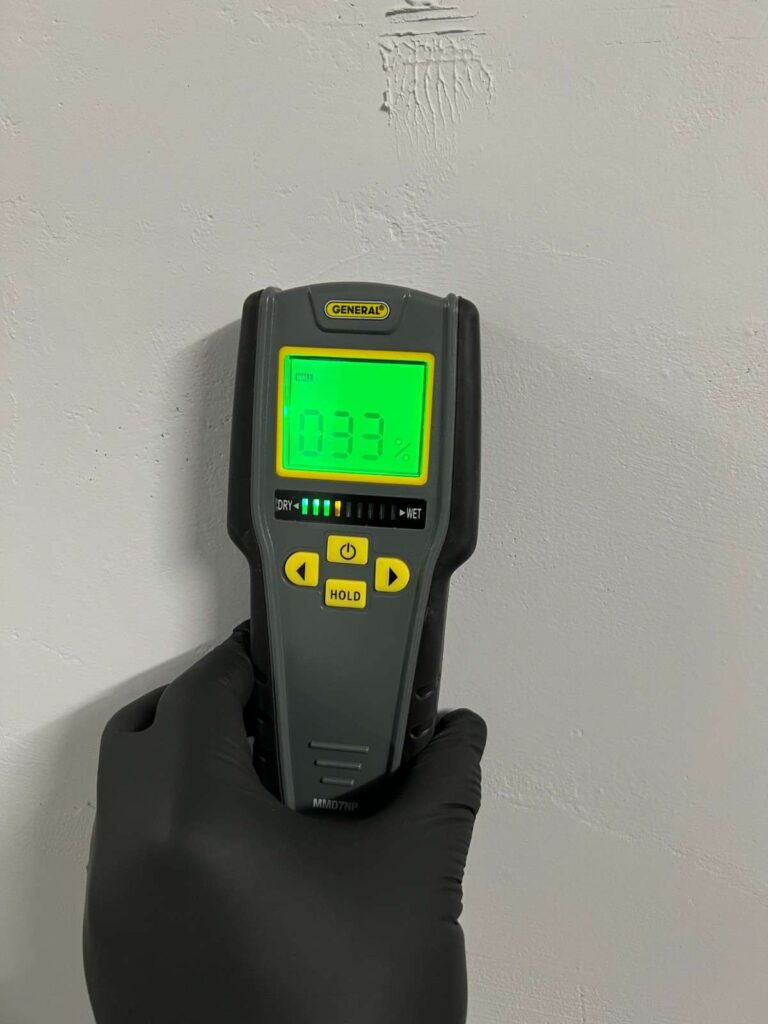
Moisture meters allow us to measure the moisture content logged in building materials like the drywall, wood, and concrete. Elevated readings indicate hidden moisture even when surfaces appear dry.

This helps us:

  • Pinpoint affected areas
  • Determine the extent of moisture spread
  • Identify materials at risk for mold growth

Acoustic Leak Detection

We use acoustic detection equipment to listen for the sound of water escaping from pressurized pipes. It is effective for locating leaks without having to open the walls or floors.

We use it in:

  • Slab leak detection
  • Commercial plumbing systems
  • Hard-to-access areas

Thermal Imaging

Our thermal imaging cameras detect temperature differences caused by moisture. With that, we can see that wet materials appear cooler than surrounding dry areas. That makes the leaks visible in real time.

Thermal imaging is particularly effective for:

  • Roof leaks
  • Wall cavity moisture
  • Ceiling and insulation issues

Humidity Sensors and Hygrometers

We measure humidity levels to discover  moisture-related problems. We use hygrometers and humidity sensors to measure indoor moisture conditions and identify damp environments that aid mold growth.

This allows us to:

  • Assess indoor air quality risks
  • Identify condensation-related issues

Recommend appropriate moisture control solutions

How New Jersey Mold Specialist Addresses the leak

Identifying moisture is only the start of the whole process. How you take care of the problem after detection is also important. At New Jersey Mold Specialist, we point out where the leak is and then we address it properly so it doesn’t return.

Once we confirm moisture intrusion or a leak, we design a solution-focused approach to eliminate the source, reduce moisture levels, and prevent future damage.

Here’s how we fix it:

Source Confirmation and Scope Assessment

After detection, we confirm the exact source of the moisture and determine how far it has spread. This includes identifying:

  • The primary entry point of water
  • Secondary areas affected by moisture migration
  • Materials that have absorbed excess moisture
  • Conditions that could support mold growth

We ensure that repairs and remediation efforts are targeted all the way.

Repairs and Remediation

We also specialize in restoration services. So, when leaks require plumbing, roofing, or structural repairs, our team works to ensure the moisture source is fully resolved before any cosmetic repairs begin.

We understand that moisture without fixing the source only leads to repeat problems. Our process prevents that cycle.

Moisture Control and Prevention

We stop the leak but we also help identify conditions that contributed to the problem, like:

  • Poor ventilation
  • High indoor humidity
  • Inadequate drainage
  • Insulation gaps

When we address these factors, we reduce the likelihood of future moisture intrusion and mold growth.

Post-Repair Verification

After repairs are completed, we do follow-up moisture checks to confirm that moisture levels have returned to normal. This is to give you the confidence that the issue has truly been resolved.

How Do We Report After Moisture Inspection?

You need clear reporting, especially when moisture issues can affect your insurance claims, property management decisions, or remediation planning. We write our moisture inspection reports clearly so you can understand while still getting all the technical detail needed.

Our reports outline the areas inspected, the tools and methods used, moisture readings and observation, and identified sources of leaks or water intrusion. This  ensures you know exactly what was found and where.

Whenever possible, we include:

  • Thermal imaging results
  • Photographs of affected areas
  • Diagrams or notes showing moisture patterns

These visuals help support repair planning and communication with contractors or insurers. Also, we don’t stop at conclusions, our reports provide clear next steps. We would suggest repairs, moisture control recommendations and monitoring or follow up inspections.

Why DIY Won’t Cut It

If you do DIY leak detection, it’s likely you see only the visible signs. And when surface repairs which may seem to solve the issue, they rarely address the moisture that’s not in sight. Those will continue to spread behind walls or under floors.

Leaks behind walls, under slabs, or inside ceilings can’t be easily seen with your eyes alone. You need professional tools like moisture meters, acoustic detection, and thermal imaging for accurate results.

Also, if you don’t do proper detection, you may repair the wrong area while the leak still continues. You’d have to spend more on repairs because there’s recurring damage.

Lastly, DIY findings rarely meet the documentation standards required by insurers, property managers, or remediation professionals. You need professional reports to provide credibility and clarity.

Contact the Experts

If you suspect a leak or want to prevent moisture problems before they escalate, reach out to us for professional leak inspection.

At New Jersey Mold Specialist, we provide reliable moisture inspection and leak detection services throughout New Jersey. We help homeowners and property managers discover moisture, stop leaks at the source, and protect properties from long-term damage.

Don’t wait for water damage or mold growth to appear.
Contact us at New Jersey Mold Specialist today to schedule your moisture inspection and get answers you can trust.

Frequently Asked Questions

I don’t see any water. Could there still be a leak?

Yes. Usually, leaks are not visible. They are hidden behind walls, under floors, or inside ceilings. By the time you see the leak, moisture has often been present on your property for weeks or months.

When you start to perceive the musty odors,  moisture must have been trapped somewhere for a while. You’ll find that often in wall cavities, basements, or HVAC systems. You can do a moisture inspection to help locate the source before mold grows.

No. It’s most effective to do moisture inspection before mold appears. That way, you get to detect and correct the moisture early helps prevent mold growth altogether.

Yes. Slow leaks can be the most troublesome because they can go unnoticed. Over time, they can rot wood, weaken structures, and create widespread mold problems.

In most cases, no. With professional moisture detection tools, you can locate moisture without demolishing or destroying your property. That saves time, money, and unnecessary repairs.

It can be and that’s because high indoor humidity encourages condensation and mold growth, even if there’s no active leak. Moisture inspection can help you determine if the humidity is contributing to the issue.

You most likely fixed the problem on the surface and didn’t address the moisture source itself. If you don’t do a proper detection, water can continue entering from another location or remain trapped in materials.

Yes, it can. When there’s  moisture, you can experience mold, poor indoor air quality, and respiratory irritation. This is especially concerning for children, seniors, and people with allergies or asthma.

It’s highly recommended. Moisture issues can affect property value, inspections, and negotiations. If you do an inspection, you get clarity and avoid surprises later.

Schedule a professional moisture inspection with us as soon as possible. With early detection, you can limit the damage, reduce repair costs, and prevent long-term issues.
