New Jersey Mold Specialist
When you start to see signs of moisture, dark patches, or classic mild signals in your home or workplace, you should call for expert mold detection. One thing we can assure you at New Jersey Mold Specialist is peace of mind and certainty. With our expert mold detection, you will get accurate results and actionable next steps.
We will help you:
With New Jersey Mold Specialist, you don’t have to worry about detecting mold. Just reach out to us, and we will assess your space and determine if mold is present or likely to develop. And the best thing is, we are available across New Jersey 24/7.
We understand the urgency of mold problems and respond quickly with certified solutions designed to protect your property and your family’s health.
In New Jersey, mold problems are rarely random. The weather changes, humidity, heavy rainfall, older buildings, and finished basements all create conditions where moisture can stay longer than it should. And where moisture sticks around, mold usually follows.
If you wait until the mold shows up, the issue has often had time to spread or cause damage. Mold detection helps you act earlier before stains worsen, materials break down, or indoor air quality is affected.
For you, professional mold detection means you’re not deciding based on surface-level signs alone. You will be getting a clearer picture of what’s happening inside your space and why.
Mold detection is especially important on your New Jersey properties because:
If you detect mold early and identify the conditions that support it, you’re in a better position to stop the issue from getting worse. Whether that means fixing a moisture source, moving on to sampling, or planning remediation depends on what we discover along the way.
Whatever it is, New Jersey Mold Specialist helps you protect your property, your time, and your peace of mind. You won’t have to wait for mold to become a bigger problem than it needs to be.
Our mold detection process is straightforward, and we aim to give you accurate results. We want to properly assess your space and determine if mold is present or likely to develop.
When you contact us, we will first take into account what you tell us. This could be moisture issues, visible changes, or recurring problems in certain areas. That gives us a place to start on the parts of your home or business that need the most attention.
From there, we carry out a detailed assessment of your space. We inspect areas where mold commonly develops and check for conditions that support mold growth, such as excess moisture, poor ventilation, or previous water damage.
Our mold detection services include:
Once the assessment is complete, we explain what we’ve found and what it means for you. If mold detection points to a potential issue, we guide you on the next steps. If no mold concerns are identified, you’ll have the reassurance you need to move forward.
During mold detection, we focus on areas where mold is most likely to develop due to moisture, airflow, and everyday use of the space. Not every area needs the same level of attention, so we concentrate on locations that commonly cause mold problems in homes and businesses.
In residential and commercial properties, certain areas tend to show signs first. These spaces either hold moisture longer or are more vulnerable to water intrusion.
Common areas we check include:
By focusing on these areas, we’re able to detect mold-related conditions early and identify patterns that may not be obvious during a quick walk-through.
If needed, we also assess surrounding spaces to understand how moisture or airflow may be affecting other parts of the building. This helps ensure the detection process is thorough and not limited to just one visible concern.
Our goal is to give you a clear picture of what’s happening in your space, so you’re not left guessing where the problem starts or how far it extends.
People usually use mold detection and mold testing in the same sentence, but they are different. If you know the difference, you can avoid unnecessary steps and get the right kind of help from the start.
When we carry out mold detection, we assess your space as a whole. We look for conditions that support mold growth and identify areas where mold is most likely to develop. This includes checking for moisture, problem-prone areas, and environmental factors that allow mold to thrive. Mold detection helps you understand whether mold is likely present and where you should pay attention.
Mold testing comes later in the process. When we recommend testing, it’s because detection has shown that collecting samples will give you useful answers. For testing, we take air or surface samples and send them to a lab to confirm the presence of mold and identify what type it is.
In most cases, we start with mold detection so you don’t waste time or money on testing that isn’t necessary. Detection helps us know if we need to test and which areas should be sampled.
Here’s how the two usually work together for you:
Sometimes, mold detection alone is enough to point you in the right direction. Other times, detection leads naturally to testing. Either way, we help you understand what’s needed and why.
After working on mold detection across New Jersey for years, we can tell you straight up that mold doesn’t behave the same way everywhere. Homes here have their own patterns, and once you’ve seen enough of them, you start to recognize the signs before mold even shows itself.
A lot of homes in New Jersey deal with moisture and it’s not always a big leak or a flood. Sometimes it’s just how the house was built, how the air moves, and how the seasons hit that particular area. We see this all the time when we’re called in for mold detection.
In many New Jersey homes, certain areas raise red flags faster than others. We often see mold-related conditions starting in:
From your side, it can feel random. From ours, these patterns are familiar.
Where your home is located in the state also plays a role. Homes closer to the coast tend to deal with higher humidity that settles indoors and lingers. Inland properties often struggle more after heavy rainfall or snowmelt, especially when drainage or grading isn’t doing its job.
During mold detection, we don’t treat these homes the same way. We adjust what we focus on based on what we know about the area, the weather patterns, and how moisture typically behaves there.
Another pattern we run into often is homes that have already dealt with water issues. Maybe there was a leak years ago. Maybe a sump pump was added after a storm. On the surface, everything looks resolved.
But during mold detection, we sometimes find that moisture never fully left the space. Certain materials may still be holding dampness, even if there’s no visible sign of a problem. That’s usually where mold has the opportunity to develop over time.
We pay attention to how your home responds to New Jersey’s climate and what those conditions mean for you going forward.
When you understand these patterns, mold detection will help you catch issues early and make informed decisions.
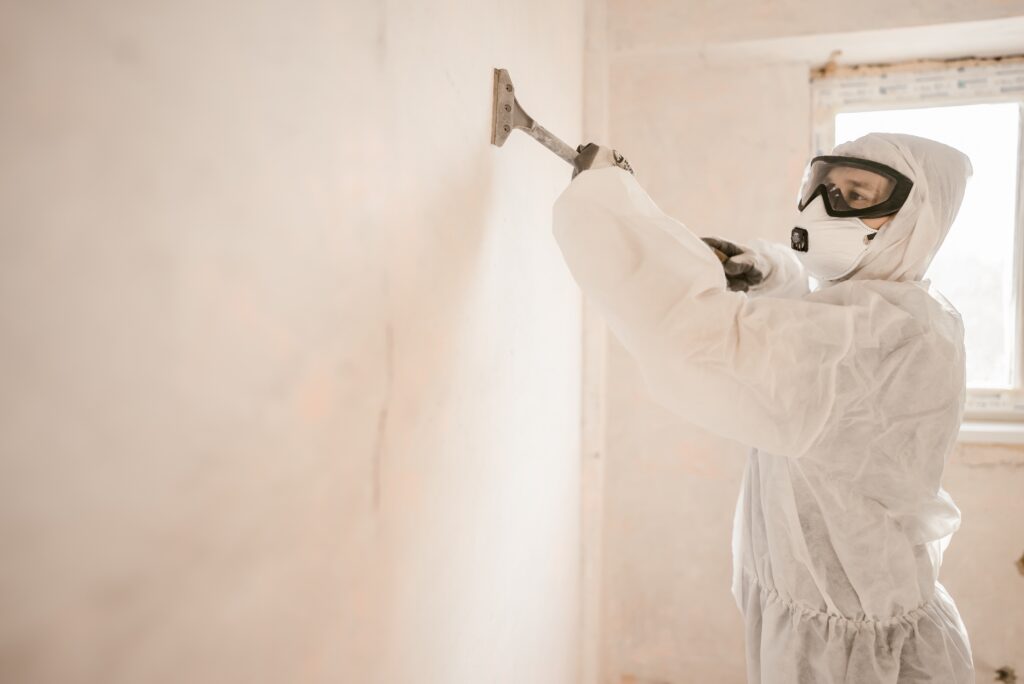
One thing we see a lot during mold detection is unnecessary panic. And honestly, we get it. When something looks off in your home, it’s easy to assume the worst. But not everything that looks like mold actually is mold, and not every mold-related concern turns into a major issue.
Part of our job during mold detection is helping you separate real problems from false alarms, so you’re not making decisions based on assumptions.
Dark spots on walls, ceilings, or around vents often trigger concern. Sometimes it is indeed mold. Other times, it’s something else entirely.
We regularly come across:
From your side, these can all look suspicious. From ours, the difference is usually clear once we assess the surrounding conditions. Mold needs the right environment to stay active. If that environment isn’t there, the stain alone doesn’t contain its presence.
Musty smells are another common concern. While mold can cause odors, it’s not the only source.
During mold detection, we often trace smells back to:
In these cases, the issue may be moisture-related without active mold growth. That distinction matters, because it changes what you need to do next.
Not all mold findings mean the same thing. Sometimes, we find evidence of old mold that’s no longer active. Other times, we see conditions that could allow mold to return if moisture isn’t addressed.
That’s why we don’t endorse DIY checks and at-home kits. They won’t tell you whether something is active, spreading, or simply left over from a past issue. Without context, it’s easy to overreact or miss what actually matters.
During mold detection, we assess the entirety of your space. We check moisture levels, airflow, and the material condition. That’s how we help you understand whether there’s a real concern or just leftover signs of a problem that’s already been resolved.
One thing we’ve learned from working in New Jersey homes is that mold problems aren’t always due to a single leak or a big water event. A lot of the time, it’s about how air and moisture move through your space on a daily basis.
During mold detection, we often see how certain layouts and habits quietly create the right conditions for moisture to stay.
Not every room in a home gets the same amount of airflow. Some spaces stay cooler, some stay warmer, and some barely get any air movement at all. Over time, that imbalance will reflect on the property.
We usually see higher mold risk in:
When air isn’t moving, moisture has more time to settle. During mold detection, we pay close attention to these low-circulation areas because they’re easy to overlook and slow to dry out.
The way your home is designed can determine where moisture collects. Split-level homes, additions, and converted spaces are some of the culprit spaces we’ve discovered so far.
For example, a finished basement that looks great can still trap humidity if it’s sealed too tightly. A converted garage may not have been built with moisture control in mind at all. You most likely won’t see the effects until we start checking conditions during mold detection.
That’s why we assess each property thoroughly. Layout tells us a lot about where moisture might hide and how mold could develop over time.
Daily life also plays a part, even when nothing feels excessive. Cooking, showering, laundry, and even how often rooms are used all affect indoor moisture levels.
During mold detection, we sometimes connect the dots between conditions and everyday routines, such as:
None of these automatically causes mold. But combined with limited airflow or existing moisture, they can tip the balance.
When ventilation, layout, and daily use work together, moisture has less opportunity to stick around. Mold detection helps us see where that balance is off and what you can do about it.
When it comes to mold detection, you might think any company with the right tools can get the job done but that’s not true.
We’ve been around long enough to know that a one-size-fits-all approach doesn’t cut it here. Your home is a part of a neighborhood, a climate, and a unique weathering that changes from town to town. That’s why knowing you need us at New Jersey Mold Specialist.
We’ve seen firsthand how these factors show up in your homes, sometimes in subtle ways you wouldn’t notice. That’s why we don’t just look for mold on surfaces, we consider how local weather patterns, building materials common in New Jersey, and even landscaping choices affect moisture and mold risk.
Plus, storms here can hit hard and fast, and we’re ready for that. Because we live and work here, we respond quickly after severe weather to help you catch mold issues before they spiral out of control.
When we’re in your home, we’re using real local know-how, the kind that only comes from years of working in New Jersey neighborhoods.
So when you choose us for mold detection, you’re not just getting a service. You’re getting a team that understands what your home really needs, right here, right now.
At New Jersey Mold Specialist, we’ve spent years learning the unique ways mold shows up across the state.
If you want to protect your home and avoid costly repairs down the line, now’s the time to act. Reach out to us for expert mold detection you can trust, backed by local experience and proven results.
We’re ready to help you understand exactly what’s going on in your space and guide you on the smartest next steps.
We get why DIY kits look tempting because they’re easy and affordable. But, most miss hidden mold or give confusing results without context. When you work with us, you get precise tools plus years of local experience, so we spot the real issues and give you clear, trustworthy answers—no guessing.
We check all the usual trouble spots—basements, bathrooms, HVAC and look for hidden moisture. Using special tools and our local knowledge, we give you a clear picture of mold risks in your home.
Mold detection shows where mold is growing. To know the exact type, we usually need to test samples in a lab. We’ll guide you if testing makes sense so you get clear, useful results.
Humidity in summer makes mold easier to grow, while winter brings condensation challenges. We adjust what we look for depending on the season, giving you the most accurate detection all year.
Musty smells, allergy symptoms, stains changing over time, or peeling paint could mean hidden mold. If you notice these, it’s smart to get a professional check.
Definitely. Catching mold early helps you fix moisture before it damages walls, floors, or systems. It’s a smart investment to avoid expensive repairs.
If we find mold, don’t worry, we’ll explain how bad it is and where it’s coming from. Then we’ll help you plan your next steps, whether that’s fixing leaks, improving airflow, or scheduling remediation. We stay with you every step so you never feel stuck or unsure what to do.
Yes. We use safe methods that protect your whole household and cause minimal disruption. Feel free to ask if you want to know more.
If you’ve had past issues, yearly checks help keep mold in check. Otherwise, every few years or when you spot signs works fine. We can help you decide.
Mold can start growing within 24 to 48 hours after water damage hits your home. The sooner you call us, the faster we can step in to assess the situation, find hidden moisture, and help you avoid bigger damage and expensive repairs down the line.
EXCELLENT Based on 71 reviews
 Posted on Google
 Mario MartinezAdam and Juan worked so Hard in our home to get rid of the mold in our basementPosted on Google
 Wilfredo PulgarinMold removal in our bathroom was great super cleans and organizedPosted on Google
 CARLOS TORRESTheir was Water damage in our home they came out at 1am and performed the workPosted on Google
 JoshVery good highly recommend. Removal was great and communication was excellent from start to FinishPosted on Google
 Mastroboy 1116We used Green Guard for mold removal in our master bedroom they were super professional and clean! and made the whole process easy from start to finish thanks guys!Posted on Google
 Jenny MulladyTerrific inspection and mold remediation from start to finish. The team was professional, thorough, and easy to work withPosted on Google
 ryanWe found a leak in our bathroom and mold in the ceiling the team came out quickly, found the issue, and handled the mold inspection professionally.Posted on Google
 Nadia MushyakovaThermal Imaging service was really informative and we found out we had a hidden leak!Posted on Google
 Avi ShalomovWe had mold in our kitchen ceiling and they handled both the mold removal and sheetrock repair everything came out perfectPosted on Google
 Jacob SamandarMold removal was done very well happy I went with them
